


Every September, Healthy Aging Month rolls around and the conversation turns to the usual suspects: exercise more, eat better, sleep enough, stay social. All great advice.
But we are going to make the case for something that almost never shows up on those lists, your teeth. Not because we’re biased (okay, maybe a little), but because the connection between a healthy mouth and a healthy, vibrant life is genuinely underappreciated, and we think you deserve to know about it.
We’ve been taking care of families in Golden Valley for a long time. We’ve seen patients in their 80s with full, healthy smiles who can eat whatever they want and feel great doing it. We’ve also seen what happens when people put off their dental care for years, assuming nothing could be done or that losing teeth was just part of the deal. It’s not. And we’d love to keep it from being your deal too.
Whether you’re reading this for yourself or because you’ve got a parent whose dental visits have become a bit… theoretical… this one’s for you.
Let’s Talk About What Your Teeth Actually Do All Day
Stick with us here, this is more interesting than it sounds.
Your mouth is basically a very efficient food processing team, and every type of tooth has a specific job. When the whole team shows up, eating is easy and enjoyable. When members start going missing, the whole operation gets harder — and the menu gets a lot less interesting.
Incisors — The Biters
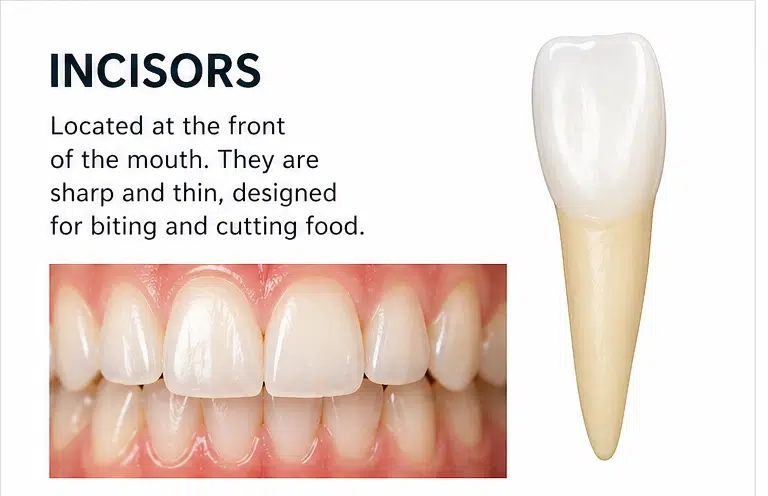
Your eight front teeth are your incisors, and their whole job is cutting food. That first bite of an apple, a sandwich, a piece of crusty bread — that’s all them. They’re also the teeth you see most when you smile, which makes them important for both function and first impressions at family dinners.
Canines — The Tearers
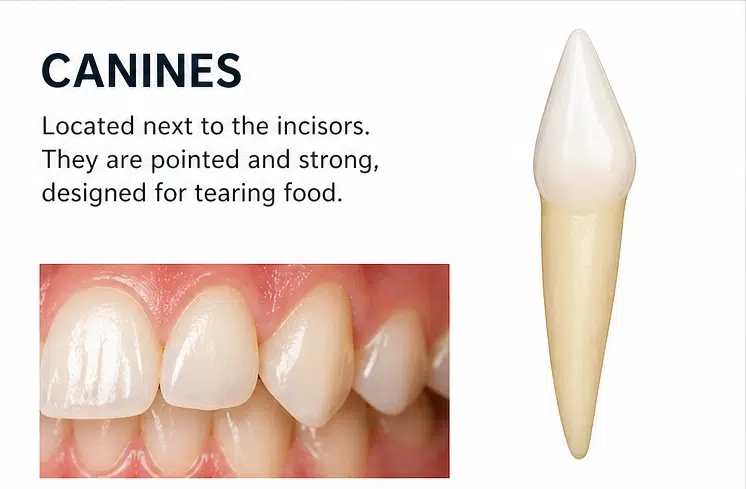
Those slightly pointed teeth just beside your front teeth are your canines. They tear food — meat, fibrous vegetables, anything with a little resistance. They also happen to have some of the longest roots in your mouth, which makes them exceptionally stable. Think of them as the reliable workhorses who never call in sick.
Premolars — The Crushers
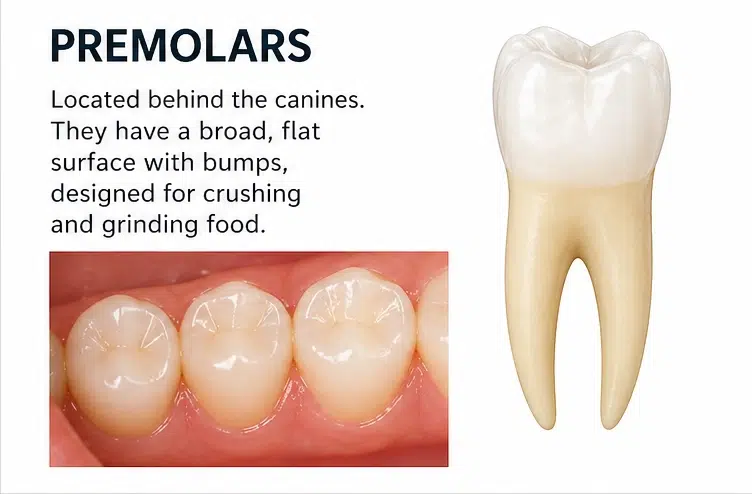
Your eight premolars sit between your canines and your back molars. They take what your front teeth have bitten and torn and start crushing it down into manageable pieces. They’re the middle management of your mouth — not the most glamorous role, but everything falls apart without them.
Molars — The Grinders
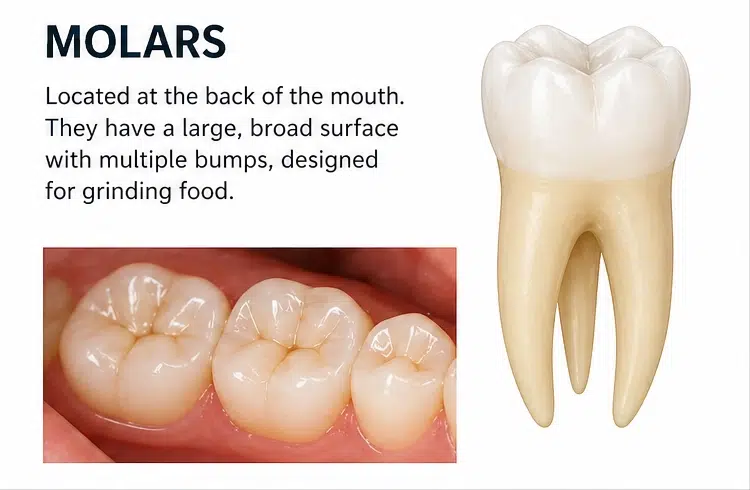
Twelve molars, six on top and six on the bottom, and they do the heavy lifting. By the time food reaches your molars, it’s getting ground down into something your digestive system can actually work with. Healthy molars mean you can eat a wide variety of foods — including the really nutritious ones that tend to require a bit of chewing.
Picture a classic turkey sandwich. Your incisors take the first bite. Your canines tear through the meat. Your premolars crush the bread and bigger chunks. Your molars grind the whole thing down until it’s ready to swallow. That’s your whole team working together — and it happens so automatically that most people never think about it until something goes wrong.
When eating gets difficult, people don’t usually announce it. They just quietly start avoiding things — raw vegetables, tough meats, whole fruits, anything chewy. What gets left on the menu tends to be softer and more processed. Which, unfortunately, is also less nutritious. It’s a slow drift that has real consequences for overall health, and it often starts with dental issues that went unaddressed.
Things That Actually Change in Your Mouth as You Age (And What’s Just a Myth)
Age does bring some changes to your oral health. But there’s a big difference between what’s inevitable and what’s just what happens when things go unmanaged for a while. Let’s sort it out.
Dry Mouth
A lot of older adults experience dry mouth, and the culprit is usually medications rather than aging itself. Hundreds of common prescriptions list dry mouth as a side effect. This matters because saliva is quietly doing a lot of important work — neutralizing acids, washing away bacteria, helping remineralize enamel. Less saliva means more cavity risk. It’s worth mentioning to both your dentist and your doctor if this sounds familiar.
Gum Disease
Gum disease is sneaky. It often progresses without much pain, which is exactly why people don’t realize they have it until it’s become a bigger problem. It’s also more common in older adults and is one of the leading causes of tooth loss, not aging. Beyond that, research has found connections between gum disease and heart disease, diabetes complications, and respiratory issues. We’ll come back to that.
Root Decay
As gums gradually recede over time, the root surfaces of teeth get exposed. Those root surfaces don’t have the same hard enamel coating that protects the rest of the tooth, so they’re more vulnerable to decay. It’s a type of cavity that’s more common in older adults and worth keeping an eye on at your regular checkups.
Worn Enamel
Years of chewing, grinding, and acid exposure do wear enamel down over time. This can cause sensitivity, increase decay risk, and change how your teeth fit together. The good news is that worn enamel is something we can monitor and address, it doesn’t have to just be accepted as the price of a long life.
Big Myth: Tooth Loss Is Inevitable
This one comes up constantly, and we feel strongly about it: losing your teeth is not just what happens when you get older.
Tooth loss is caused by disease, primarily untreated decay and gum disease. People who take care of their teeth and show up for regular appointments can normally keep their natural teeth for life. We see it this all the time. Some of our longest-running patients are in their 80s and still have all or most of their original teeth because they never stopped coming in.
If you’re reading this as an adult child who’s been watching a parent slowly give up on their dental health because “what’s the point at my age”, please share this with them. It is almost never too late to make meaningful improvements. And even patients who have already lost teeth have good options for restoring comfort and function. We work with people where they are, not where they wish they’d started.
Your Mouth and the Rest of You Are in Constant Conversation
Here’s where it gets really fascinating, and also a little sobering.
Oral health doesn’t stay contained to your mouth. What happens in there has connections to what’s happening throughout your body and the research on this has grown significantly in recent years. We’re talking real, peer-reviewed connections that your primary care doctor probably wishes more people understood.
Gum disease and heart disease have a well-documented association. The bacteria involved in periodontal disease can enter the bloodstream and contribute to inflammation that affects cardiovascular health. For people managing diabetes, the relationship is particularly direct: uncontrolled blood sugar makes gum disease worse, and active gum disease makes blood sugar harder to control. It goes both ways, which means managing one helps the other.
For older adults specifically, there’s also the respiratory angle. Bacteria from the mouth can be aspirated into the lungs, which sounds alarming, but the practical takeaway is simple: good oral hygiene reduces this risk meaningfully. And emerging research continues to explore connections between oral health and cognitive health, though that’s still an evolving area.
None of this means flossing is a cure-all. But it does mean that taking care of your mouth is a real, legitimate part of taking care of yourself, not a vanity project, not optional maintenance. It belongs on the healthy aging checklist.
Practical Things That Actually Help
The basics haven’t changed, but how you do them sometimes needs to adapt as life does.
Show Up for Your Cleanings
We know, we know. But twice-yearly cleanings are genuinely the thing that catches problems while they’re still small and inexpensive. Think of it as your early warning system. Skipping them doesn’t mean nothing is happening in your mouth, it just means nobody’s looking. For some patients with higher risk factors, we’ll recommend coming in every three to four months instead. We’ll tell you if that’s you.
Work Smarter With Your Home Routine
Arthritis, reduced grip strength, and general “my hands just don’t do that anymore” are real obstacles for a lot of older adults. An electric toothbrush is a game changer here, it does most of the work for you and is significantly easier to handle than a manual brush. Water flossers are another great option for anyone who finds traditional floss frustrating. The goal isn’t to do it the way you’ve always done it — the goal is to do it.
Drink More Water (Boring Advice, Real Results)
Staying hydrated helps combat dry mouth, which as we mentioned is one of the bigger under-the-radar risk factors for older adults. Water is the right call here, not juice, not sports drinks, not extra coffee. Chewing sugar-free gum is also a surprisingly effective way to stimulate saliva flow between meals. Small habit, real benefit.
Don’t Normalize Discomfort
This one is big. Older adults have a tendency to normalize things that are actually worth paying attention to sore gums, sensitivity, a tooth that feels a little loose. “It’s probably just age” is a phrase we hear a lot, and it’s often not accurate. Pain and changes in your mouth are signals. The sooner something gets looked at, the more options there are for addressing it easily. Waiting turns small problems into bigger ones, and bigger ones into expensive ones.
Hey, Adult Children, This Part Is for You
If you got to this blog because you’re trying to help a parent take better care of themselves, first of all, you’re a good kid. Second, dental health is one of the areas that most commonly falls through the cracks when people are managing an aging parent’s overall wellness, and it matters more than most people realize.
A few things worth checking on:
- When was their last dental visit? “A while ago” or “I can’t remember” means it’s time. Even if they’re resistant, even if they think it’s pointless at their age — it’s not pointless, and we’re good at making anxious or long-absent patients feel at ease.
- Have their eating habits quietly changed? This is the one people miss most. If mom has stopped eating salads, or dad always orders the softest thing on the menu, that might not be a preference shift — it might be that chewing has become uncomfortable. Worth asking.
- Are their dentures or partials still fitting properly? Ill-fitting dentures cause sores, affect eating, and often go unaddressed for years out of habit or the assumption that nothing can be done. Something can usually be done.
- Do they actually like their dentist? Comfort matters. If they’ve been going somewhere out of habit and dreading every visit, switching to somewhere they feel genuinely welcome makes a difference in whether they keep going. We’d love to be that place.
We treat multi-generational families here, and it’s honestly one of our favorite things. Adult children bring parents in for the first time all the time and sometimes the adult child ends up becoming our patient too. We take time with older patients, we explain things without talking down to anyone, and we don’t recommend treatment people don’t need. Come see us.
You Only Get One Smile, Let’s Keep It Working for You
Healthy Aging Month only comes around once a year, but your teeth are on the job every single day. The patients we see thriving in their later decades aren’t doing anything magical, they’re just the ones who kept showing up. Brushing, flossing, and coming in for their cleanings.
If you’re overdue, this is your sign. If your parent is overdue, forward this to them. If you’ve been meaning to find a dentist that feels like a good fit for the whole family… hi, that might be us.
Bassett Creek Dental is located in Golden Valley, easy to get to from Plymouth, St. Louis Park, and the western suburbs. We’re open early, late, and Saturdays. Call us at 763-546-1301 or request an appointment online. We’ll take good care of you and we promise we’re more fun than your last dentist.
Frequently Asked Questions
Is losing teeth a normal part of aging?
Nope, and this might be the most important thing in this entire article. Tooth loss is caused by disease, mostly untreated decay and gum disease, not by getting older. Adults who keep up with their dental care and home hygiene routines can absolutely keep their natural teeth for life. If you or a parent have been operating under the assumption that losing teeth is inevitable, please let that go. It changes what feels worth doing.
How does oral health affect overall health as we age?
More than most people expect. Gum disease has been linked to increased risk of heart disease and makes diabetes harder to manage. Bacteria from the mouth can affect respiratory health, which matters more as we get older. Research into connections with cognitive health is ongoing. The short version: what happens in your mouth doesn’t stay in your mouth, and taking care of it is a legitimate part of taking care of your whole self.
What are the most common dental issues for older adults?
The big ones we see are gum disease, dry mouth (usually from medications), root surface decay as gums recede, and worn enamel from decades of use. None of these are fun, but all of them are manageable, especially when caught early. The key is regular monitoring, which is why those twice-yearly visits matter so much.
My parent has arthritis and really struggles to brush and floss. What helps?
Electric toothbrush, full stop. It does most of the work and requires a lot less grip and dexterity than a manual brush. For flossing, a water flosser is a fantastic alternative, easy to use, effective, and much less frustrating for anyone whose hands don’t cooperate the way they used to. We can make specific recommendations based on what your parent is dealing with when they come in.
How often should older adults see a dentist?
Twice a year is the standard recommendation for most people, and that doesn’t change just because someone is older. For patients with active gum disease, dry mouth, or a history of frequent cavities, we might recommend coming in every three to four months instead. If it’s been a while, the first step is just getting back in so we can see where things stand — no judgment, just a good look and a plan.
My parent hasn’t been to a dentist in years. Is it really worth starting now?
Yes. We hear this a lot and we understand the hesitation. Fhere’s often guilt, embarrassment, or a belief that too much has been missed to bother. None of that is true. We see patients who haven’t been in for a decade and in almost every case there is meaningful help we can offer. We’re not going to make anyone feel bad for what didn’t happen. We’re just going to focus on what we can do from here.