

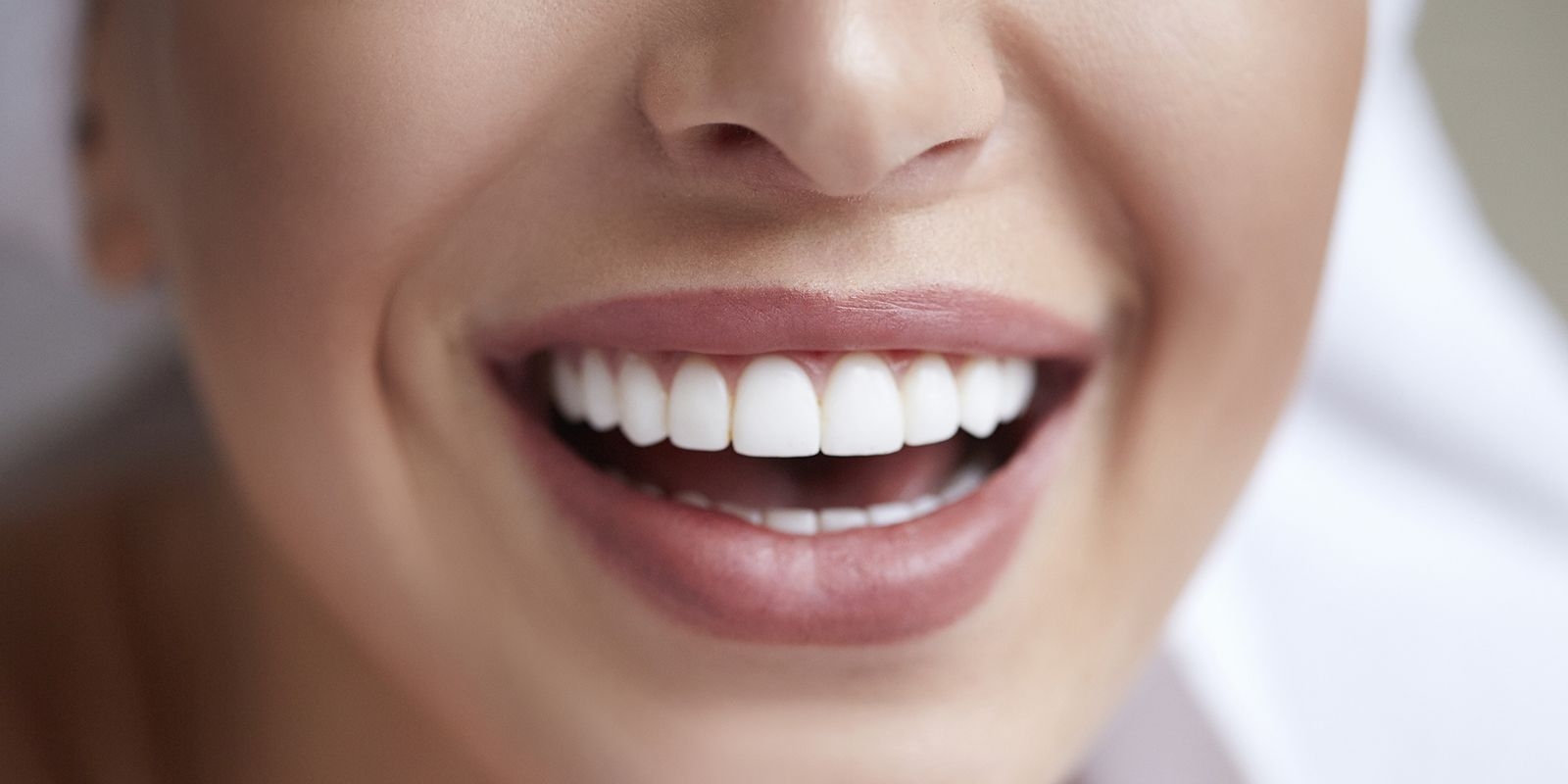
You brush twice a day. You (mostly) floss. You know sugar is the enemy. But how well do you actually know your teeth?
Teeth are doing a lot more than you might think and some of what’s happening in your mouth right now is genuinely fascinating.
Here are ten things that might surprise you
1. Enamel is the hardest substance your body makes
Harder than bone. Harder than any other tissue in the human body. Enamel is the outer shell that gives your teeth their shiny appearance and protects the softer layers underneath like dentin and pulp from bacteria, temperature, and the general chaos of eating.
The catch: your body can’t make more of it. Once enamel erodes from acid, grinding, or decay it’s gone for good. That’s why protecting it now matters so much. Acidic drinks, aggressive brushing, and certain medications are among the biggest culprits.
2. You have four types of teeth, and each one has a job.
Your mouth is more specialized than it looks:
- Incisors (8): your front teeth, built for biting and cutting
- Canines (4): the pointed teeth on either side, designed for tearing
- Premolars (8): flat and wide, positioned to crush food before it reaches the back
- Molars (12, including wisdom teeth): the powerhouses in the back that grind everything down
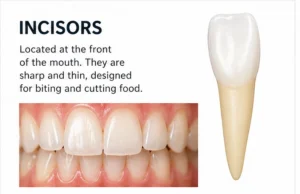
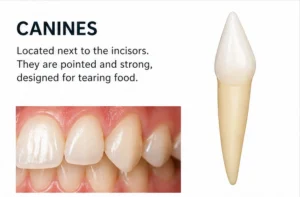
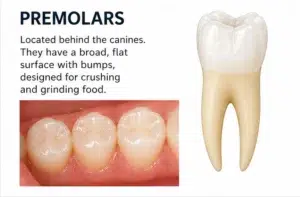
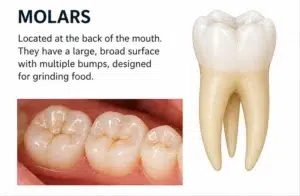
Every time you take a bite of something, all four types are coordinating. It’s a pretty efficient system, when everything’s aligned and healthy.
3. Your teeth are as unique as your fingerprints
No two people have the same set of teeth. The shape, spacing, and structure of your teeth are unique to you — which is exactly why dental records have been used in forensic identification for over a century. Your tongue has a unique print too, for what it’s worth.
4. A third of each tooth is hidden
What you see when you smile is only about two-thirds of the tooth. The rest is anchored below the gumline in the jawbone. This is one reason gum health matters so much — the gums and bone holding your teeth in place are doing critical structural work that never gets much credit.
5. Your mouth hosts somewhere between 200 and 300 types of bacteria
Most of them are harmless. Some are actually helpful. But a handful of bacterial strains — particularly Streptococcus mutans — are responsible for breaking down sugars, producing acids, and driving tooth decay. The goal isn’t a sterile mouth (impossible anyway). The goal is keeping the bad actors in check through consistent hygiene and regular cleanings.
6. You’ll produce roughly 10,000 gallons of saliva in your lifetime
That’s about a quart a day, every day. Saliva isn’t just for swallowing — it’s one of your mouth’s primary defense systems. It neutralizes acids, washes away food particles, delivers minerals that help remineralize enamel, and contains antibacterial compounds. Dry mouth isn’t just uncomfortable; it significantly increases your risk of decay. Staying hydrated is genuinely good dental advice.
7. Teeth can’t heal themselves
Bones can. If you break your arm, your body will knit it back together over time. Teeth don’t work that way. Once a tooth is chipped, cracked, or decayed, it needs professional treatment — because the damage won’t reverse on its own and will almost always get worse if left alone.
This is the single biggest reason that skipping dental appointments is a false economy. Small problems caught early are simple fixes. The same problems left alone become crowns, root canals, or extractions.
8. Your bite can generate up to 200 pounds of pressure
Molars especially. The muscles involved in chewing — particularly the masseter — are among the strongest muscles in the body relative to their size. That force is part of why well-fitting crowns, night guards for grinders, and properly aligned bites matter. Misaligned pressure over time does real damage.
9. Baby teeth matter more than most people think
This one’s for the parents: primary teeth aren’t just placeholders. They hold space in the jaw for permanent teeth, help with speech development, and affect how kids chew and eat during critical growth years. Decay in baby teeth can cause pain, infection, and alignment problems down the road. “They’ll fall out anyway” isn’t a reason to skip care.
10. Your mouth is often the first place systemic health problems show up
Gum disease has been linked to cardiovascular disease, diabetes complications, and other systemic conditions. Changes in your teeth and gums — unusual bleeding, persistent dry mouth, new sensitivity — can be early signals of things going on elsewhere in the body. Your dentist isn’t just looking at your teeth.
Frequently Asked Questions About Teeth
What is the hardest substance in the human body?
Tooth enamel is the hardest substance the human body produces. It’s stronger than bone, though unlike bone it cannot regenerate once it’s lost.
Can teeth repair themselves?
No. Unlike bone, teeth cannot heal on their own. Chips, cracks, and decay all require professional dental treatment. This is one of the most important reasons to keep up with regular dental appointments — small issues caught early are much easier and less expensive to treat.
How many types of teeth do humans have?
Adults have four types of teeth: incisors, canines, premolars, and molars. Each serves a different function in biting, tearing, crushing, and grinding food.
Why is saliva important for oral health?
Saliva neutralizes acids in the mouth, washes away food debris, helps remineralize enamel, and contains antibacterial properties. Chronic dry mouth significantly increases the risk of tooth decay.
How much bite force can human teeth generate?
Human molars can exert up to 200 pounds of pressure. The masseter muscle, which drives jaw movement, is one of the strongest muscles in the body relative to its size.
How many bacteria live in the mouth?
The mouth contains somewhere between 200 and 300 species of bacteria. Most are harmless, but certain strains — particularly Streptococcus mutans — are responsible for producing the acids that cause tooth decay.