

If you’ve ever tried to brush the teeth of a toddler who has decided they are not having any part of it, you know how quickly a two-minute simple task can become a huge deal.
Suddenly their mouth is clamped shut. The toothbrush is on the floor. Someone is crying. Your toddler has developed the rotational strength of a small alligator, and you’re questioning whether their tiny teeth really need this much attention.
Sorry, not want you probably want to hear, but their little teeth really are worth the fight.
But that doesn’t mean toothbrushing has to be a battle every morning and night.
Toddlers resist brushing for all kinds of reasons. They want independence. They don’t like the sensation. They’re tired. They dislike the toothpaste. Or they simply discovered that saying “NO!” gets a very interesting reaction from the adults in the room.
If you are like most parents and brushing has become a struggle at your house, here are some things worth trying.
First, Yes, You Really Do Need to Brush Those Tiny Teeth
Baby teeth may eventually fall out, but they’re important while they’re here. They help children eat and speak, hold space for permanent teeth, and, unfortunately, can develop cavities just like adult teeth.
The American Dental Association recommends beginning to brush as soon as the first tooth erupts. Teeth should be brushed twice a day for two minutes using fluoride toothpaste, with a parent or caregiver helping or supervising young children.
That’s great, but now as you look at your toddler with a mouth full of teeth and think…Great now they tell me I should have started this months ago…It’s all good today is a good day to start, no judgement. You have to start somewhere!
The amount of toothpaste matters:
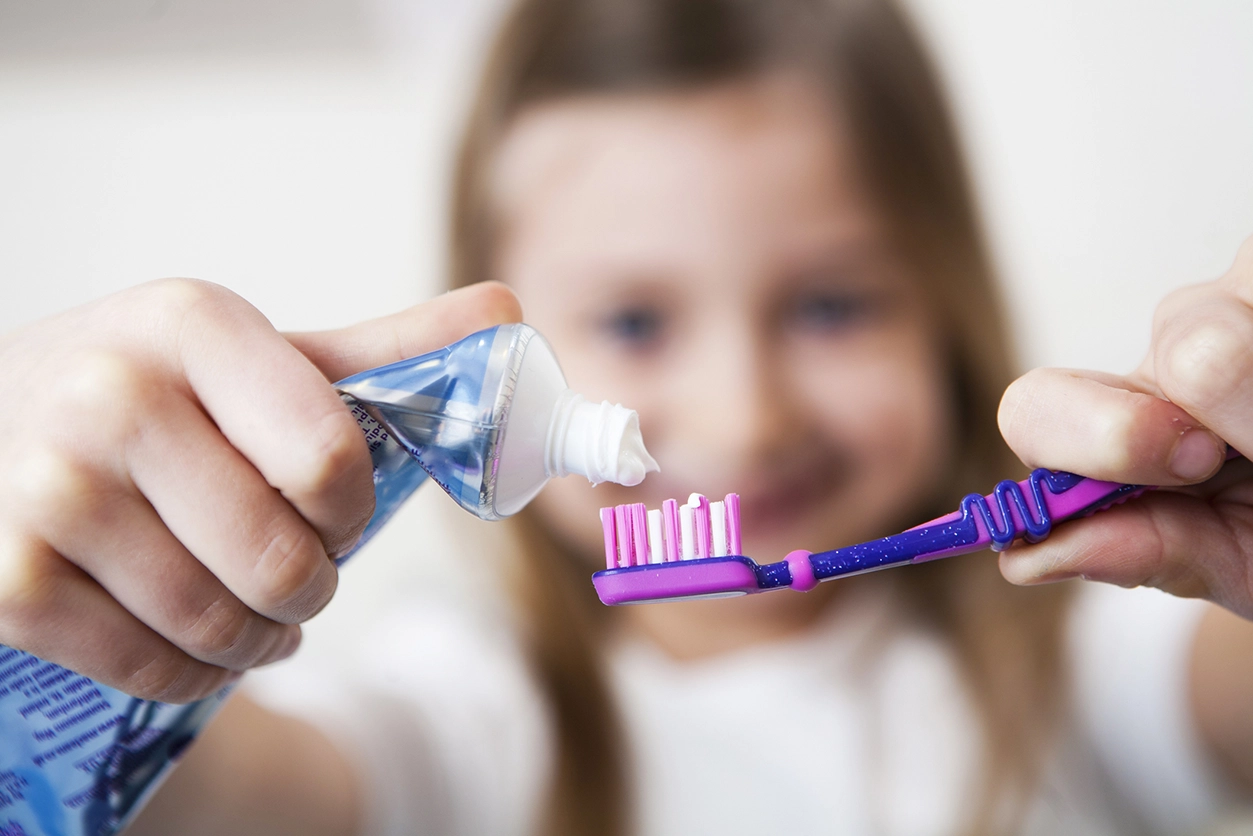
- Under age 3: Use a smear about the size of a grain of rice.
- Ages 3–6: Use a pea-sized amount.
- Young children: Parents should dispense the toothpaste and supervise brushing.
So yes, even if your toddler currently has six teeth and considers toothpaste a personal insult, brushing still matters.
Now let’s try to make it a little bit easier for everyone.
1. Give Them Choices, Just Not the Choice to Skip Brushing
Toddlers love control. Toothbrushing offers plenty of opportunities to give them some without making brushing optional. Remember, avoid questions that allow for a yes or no answer, your toddler will likely say no. Don’t give them that choice.
Simple Switches
“Do you want to brush your teeth?”
Try:
“Do you want the blue toothbrush or the green one?”
“Should we brush before pajamas or after?”
“Do you want to stand on the stool or sit on my lap?”
“Do you want to start, or should I?”
They’re still brushing their teeth. They just get to make some decisions about how it happens. For a two-year-old, this can be surprisingly powerful.
2. Let Them Brush First, Then You Get a Turn
Toddlers should absolutely be encouraged to practice brushing their own teeth. It’s how they learn, but the problem is they just aren’t very good at it yet.
Let your child brush first and make a big deal about what a good job they’re doing. Then establish a predictable routine:
“Your turn, then my turn.”
When they’re finished, the parent takes over and thoroughly brushes all the tooth surfaces.
This gives your toddler the independence they’re craving without relying on their 30 seconds of enthusiastic chewing on the toothbrush to accomplish the entire job.
3. Brush Together
Sometimes the easiest way to teach a toddler something is simply to let them copy you. Grab your toothbrush and brush at the same time. Open wide so they can see what you’re doing. Brush your front teeth. Brush the sides. Make ridiculous brushing faces in the mirror if necessary.
You can even let your toddler “help” brush your teeth before you help with theirs.
4. Stop Assuming Brushing Has to Happen in the Bathroom
There’s no dental law requiring a toddler to stand politely at the bathroom sink. If the bathroom has become the scene of nightly toothbrush negotiations, change the setting.
Try brushing:
- Sitting on the floor
- On your lap
- In front of a mirror somewhere else
- During bath time
- While they’re looking at a favorite book
- Lying down with their head in your lap
For very young children, having them lie back can actually make it easier for you to see their teeth and brush thoroughly.
Sometimes changing the location is enough to interrupt the pattern of “We entered the bathroom, therefore I must immediately protest.”
5. Let the Stuffed Animals Go First
Toddlers love being the expert. Before brushing your child’s teeth, let them brush Teddy’s teeth. Or the dinosaur’s. Or the stuffed rabbit’s suspiciously nonexistent teeth.
You can narrate the whole thing:
“Does Teddy open really wide?”
“Wow! He’s doing such a good job.”
“I think Teddy has to brush the back teeth too.”
Then it’s your toddler’s turn. This isn’t just distraction. Play is how young children practice routines and make unfamiliar experiences feel predictable.
6. Experiment With Toothpaste Flavor
Adults tend to assume toothpaste should taste aggressively minty because that’s what toothpaste tastes like. A toddler may strongly disagree.
Some children dislike mint, strong flavors, foaming, or even the texture of certain toothpastes. If your child consistently fights brushing, try a different child-appropriate fluoride toothpaste.
The ADA recommends fluoride toothpaste because fluoride helps strengthen enamel and prevent tooth decay. For children under 3, you only need that tiny rice-sized smear, so there is no need to load up the brush.
Finding a flavor your child tolerates, or even likes, can remove one unnecessary obstacle from the routine.
What About Fluoride-Free Toothpaste for Toddlers?
If you’ve spent any time in the children’s toothpaste aisle lately, you’ve probably noticed a growing number of products labeled fluoride-free, natural, or marketed with alternative ingredients. Outside of the dental aisle there is also a lot trending in the media right now about fluoride-free being best for littles.
It’s understandable that parents have questions. Young children aren’t exactly known for their impeccable toothpaste-spitting skills, and there’s a lot of conflicting information about fluoride online.
Here’s what we want parents to know: the American Dental Association and American Academy of Pediatric Dentistry continue to recommend fluoride toothpaste for children beginning when the first tooth appears.
Fluoride helps strengthen tooth enamel and makes teeth more resistant to decay. Research has consistently shown that brushing with fluoride toothpaste reduces cavities, which is particularly important for little teeth that can develop decay surprisingly quickly.
The key with toddlers isn’t avoiding fluoride. It’s using the right amount.
- Younger than 3: Use a tiny smear, about the size of a grain of rice.
- Ages 3–6: Use a pea-sized amount.
- Parents should dispense the toothpaste rather than letting young children load up the toothbrush themselves.
- Supervise brushing and encourage children to spit as they learn how.
Those amounts are intentionally small. The recommendations are designed to provide the cavity-prevention benefit of fluoride while limiting how much toothpaste a young child could swallow.
What About Hydroxyapatite Toothpaste?
You may also see children’s toothpastes containing hydroxyapatite, an ingredient increasingly marketed as an alternative to fluoride.
There’s growing interest in hydroxyapatite because research suggests it may help with enamel remineralization and cavity prevention. Research into its use in toothpaste continues, particularly as parents look for alternatives to traditional fluoride products.
That doesn’t mean fluoride has suddenly become outdated.
Fluoride toothpaste has decades of research supporting its ability to prevent cavities, and it remains the recommendation of major U.S. dental organizations for children.
If you’re currently using a fluoride-free toothpaste because you’re concerned about fluoride, don’t feel like you’ve committed some terrible parenting offense. Bring the toothpaste, or even a photo of the ingredients, to your child’s next appointment.
We can talk about what you’re using, your child’s cavity risk, your water source, and what makes the most sense for their teeth.
There are enough parenting decisions to lose sleep over. Toothpaste doesn’t need to become another one.
7. Use a Song, Timer, or Very Short Story
Two minutes feels surprisingly long when you’re two. So parents and caregivers, you need to:
- Make the time concrete
- Pick one specific brushing song
- Use a two-minute timer
- Tell a ridiculous ongoing story that only happens during toothbrushing
Maybe there’s a tiny dinosaur hiding behind the molars.
Maybe the toothbrush is searching for leftover blueberries.
Maybe you’re counting how many teeth you can find.
It doesn’t need to be elaborate. In fact, you’ll probably regret making it elaborate when you’re required to perform the same production twice a day for the next eight months.
Simple and repeatable wins.
8. Try an Electric Toothbrush if Your Child Likes It
Both manual and powered toothbrushes can effectively clean teeth when used properly. Some toddlers think an electric toothbrush is fascinating and suddenly become much more interested in brushing.
Others react to the vibration as though you’ve handed them a live hornet. Either response is normal.
If your child likes the sensation, a child-sized powered toothbrush can be worth trying. If they hate it, don’t force the issue. A soft-bristled manual toothbrush works perfectly well too.
The best toothbrush is ultimately one you can use effectively and consistently.
9. Make Brushing Predictable, Not Negotiable
This may be the most important behavioral trick on the list. Try not to make brushing feel like a nightly decision. Instead, make it part of the sequence:
- Bath
- Pajamas
- Brush teeth
- Books
- Bed
Toddlers thrive on knowing what happens next. When brushing occurs at roughly the same points every morning and evening, it gradually becomes less of an event and more of simply what the family does.
There will still be nights when your child strongly objects.
Consistency doesn’t mean they’ll always be delighted about it. It means the expectation doesn’t change depending on how loudly they object.
10. Don’t Use the Dentist as a Threat
This one matters to us, we don’t want your kiddos to be scared of us, we are not the bad guys..
Try to avoid:
“If you don’t brush, the dentist is going to be mad.”
Or:
“You’re going to get cavities and the dentist will have to drill your teeth!”
We understand the temptation. Parenting occasionally involves saying sentences you never imagined would leave your mouth.
But we want children to see the dental office as a safe, familiar place where people help them take care of their teeth, not somewhere they’re sent because they did something wrong.
Instead, keep the explanation simple:
“We brush our teeth because that’s how we keep them healthy.”
The boundary can be firm without making dental care scary.
What If My Toddler Absolutely Refuses?
Sometimes you’ve offered choices, sung the song, brushed the stuffed bear, switched toothpaste, performed an award-worthy dramatic interpretation of “The Toothbrush Looking for Sugar Bugs” and your toddler still says no.
At that point, remember: you are the parent, and brushing is health care.
Young children don’t get to decide whether they wear a seat belt, take necessary medication, or have a dirty diaper changed. Dental care falls into a similar category.
Stay calm, keep the routine predictable, and help them brush as gently and efficiently as you can.
You don’t need to shame them, scare them, or turn it into a punishment. But you also don’t have to abandon brushing because they’re unhappy about it.
And if one bedtime occasionally goes completely sideways? You’re human. Get back to the routine at the next brushing rather than deciding you’ve permanently ruined your child’s dental future.
Consistency over time is what matters.
When Can Kids Actually Brush Their Own Teeth?
This is where parents sometimes hand over responsibility too early.
A toddler holding a toothbrush and moving it around their mouth is practicing an important skill, but that doesn’t mean they’re thoroughly removing plaque from every tooth surface.
Young children still need significant help from an adult.
As coordination improves, children can gradually do more of the brushing themselves, but parents should continue to assist or supervise until the child has developed the skills needed to brush thoroughly and appropriately manage toothpaste.
Let them practice, but you make sure the job gets finished.
If you’re not sure whether your child is ready for more independence, ask at their next dental visit. We can look at how they’re brushing and help you determine where they still need assistance.
A Quick Toddler Toothbrushing Cheat Sheet
- Start brushing when the first tooth appears
- Brush twice a day for two minutes
- Use a soft-bristled, child-sized toothbrush
- Under age 3, use a rice-sized smear of fluoride toothpaste
- Ages 3–6, use a pea-sized amount of fluoride toothpaste
- Parents should help or supervise young children
- Make brushing predictable rather than optional
- Don’t use the dentist as a threat
- If brushing is consistently difficult, bring it up with your dental team
Your Toddler Doesn’t Have to Love Brushing
Some kids genuinely enjoy brushing their teeth. Some tolerate it. And some behave as though you’ve proposed brushing their teeth with a cactus. All three can grow up with healthy smiles.
Your goal isn’t to create a toddler who skips happily into the bathroom twice a day begging for their toothbrush. It’s to establish a routine, protect those little teeth, and gradually teach them the skills they’ll eventually use on their own.
And if brushing at home has become particularly difficult, tell us.
At Bassett Creek Dental in Golden Valley, we work with families to make dental care feel comfortable and positive from an early age. We can help with brushing technique, toothbrush and toothpaste questions, cavity prevention, and those wonderfully specific toddler dental questions you never knew you’d have until you became a parent.
Sometimes kids are also much more willing to hear brushing advice when it comes from someone who isn’t Mom or Dad. We’re happy to be the backup.
Ready for your child’s next dental visit? Contact Bassett Creek Dental to schedule an appointment.
Frequently Asked Questions About Brushing Toddler Teeth
What should I do if my toddler won’t let me brush their teeth?
Try giving your child limited choices, allowing them to brush first, changing the brushing location, brushing together, or incorporating a song or toy into the routine. Keep the expectation consistent: brushing happens twice a day even if your toddler isn’t thrilled about it.
Should toddlers use fluoride toothpaste?
Yes. The American Dental Association and American Academy of Pediatric Dentistry recommend fluoride toothpaste beginning when the first tooth erupts. Children under 3 should use only a smear about the size of a grain of rice. Children ages 3–6 should use a pea-sized amount, with an adult dispensing the toothpaste and supervising brushing.
Is fluoride-free toothpaste okay for toddlers?
Fluoride-free toothpaste can still help mechanically remove plaque during brushing, and alternative ingredients such as hydroxyapatite are being studied for their potential dental benefits. However, fluoride toothpaste has extensive evidence supporting cavity prevention and remains recommended for children by major U.S. dental organizations. If you’re unsure which toothpaste is appropriate for your child, ask your dentist based on your child’s individual cavity risk and needs.
How often should I brush my toddler’s teeth?
Brush twice a day for two minutes with fluoride toothpaste. For most families, brushing in the morning and again before bed is the easiest routine to maintain.
Is an electric toothbrush better for toddlers?
Not necessarily. Both manual and powered toothbrushes can clean teeth effectively when used correctly. Some children enjoy an electric toothbrush while others dislike the vibration or sound. A child-sized, soft-bristled toothbrush that you can use consistently is a good choice.
What if my toddler swallows toothpaste?
Young children often haven’t fully mastered spitting, which is one reason the recommended amount of toothpaste is so small. Use only a rice-sized smear of fluoride toothpaste for children younger than 3 and supervise brushing. If you have concerns about how much toothpaste your child is swallowing, talk with your dentist.