

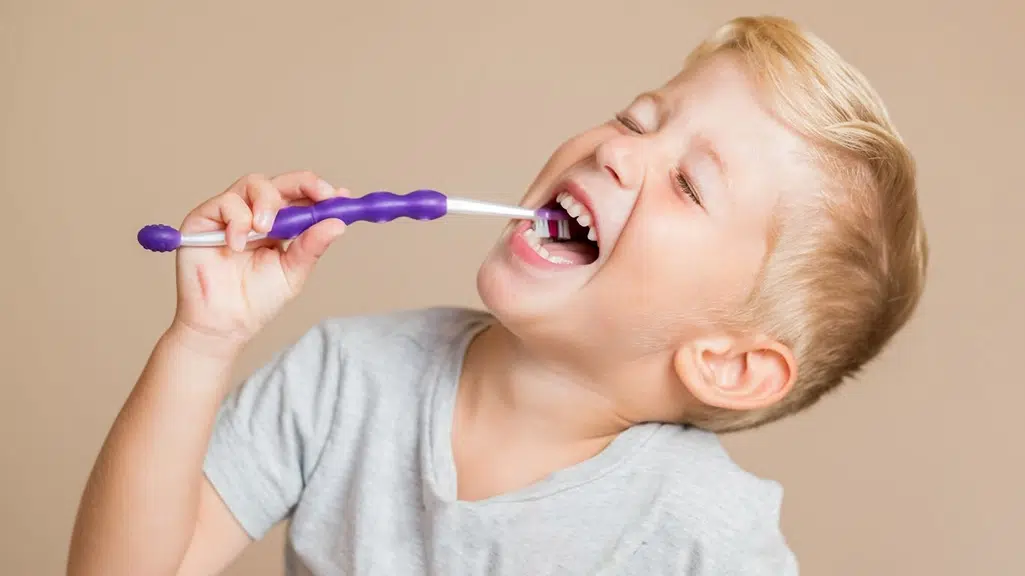
If you have children, you have probably stood in a bathroom at 8:30 pm negotiating with someone who has absolutely no leverage and still somehow has all the power. Or does this sound familiar…chasing after your toddler as they scream and cry refusing to allow you to help brush their teeth?
The toothbrush standoff is one of parenting’s most universal experiences, right up there with the car seat battle and the “I’m not tired” argument at 10 pm. And yet every single night, parents fight these battles. Wondering, “Seriously we do this every day…why are they still fighting it??”
We see the results of both winning and losing this battle every day in our office. Healthy little mouths. Also mouths that needed a lot more work than they should have. So here is what actually helps, broken down by age, with the dental reasoning behind it so you understand why each thing matters and not just that we said so.
First, the Basics That Apply at Every Age
Before we get into age-specific strategies, a few things that matter regardless of whether your child is two or fourteen.
Fluoride toothpaste is not optional
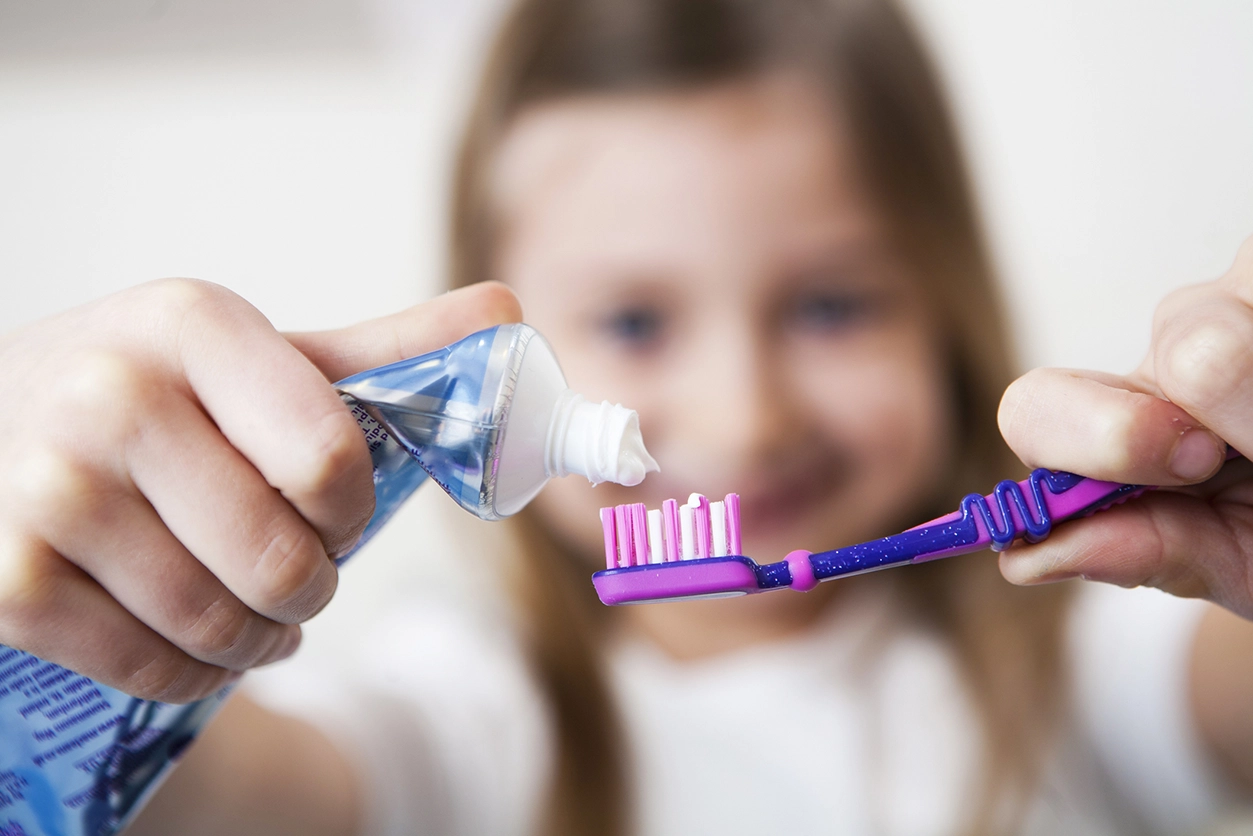
Fluoride is the single most effective tool for preventing cavities in children. It strengthens enamel and helps teeth resist the acid attacks that cause decay. The American Dental Association recommends fluoride toothpaste for children starting when the first tooth appears. For kids under three, use a smear about the size of a grain of rice. Ages three to six, a pea-sized amount. Over six, they can use a regular adult-sized amount.
“Natural” or fluoride-free toothpastes are a growing trend. We understand the appeal. But they do not provide the same level of cavity protection, and we see the difference in our patients. If fluoride concerns you, bring it up at your child’s next appointment and we will talk through it honestly.
Two minutes is the target, not a suggestion
Two minutes covers all four sections of the mouth. Most kids left to their own devices brush for about 30 seconds or less and call it done. A timer, a song, an app, or a YouTube video exactly two minutes long are all legitimate tools. Use whatever works. The goal is the time, not the method.
Soft bristles only
Kids brush hard. Hard bristles on developing enamel and tender gums cause damage that adds up over time. Always soft bristles, always. Check the package if you are not sure.
Replace the brush regularly
Every three to four months, or sooner if the bristles look like they lost a fight. Worn bristles do not clean effectively. Kids go through brushes faster than adults because they are more likely to chew on them, which is a whole separate conversation.
Toddlers and Young Kids (Ages 2 to 6): Make It a Game, Not a Chore
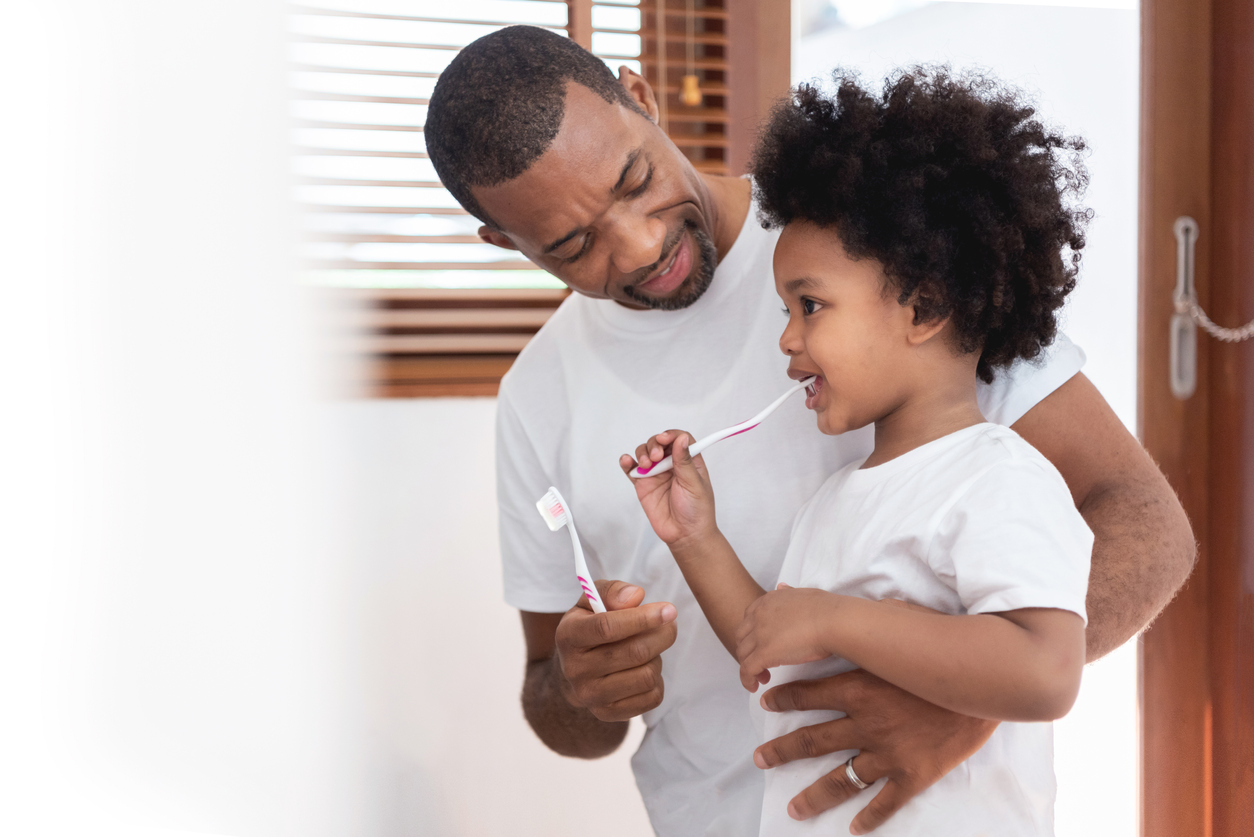
At this age, you are not reasoning with anyone. Logic is not the strategy. Fun is the strategy.
Let them pick the toothbrush. A toothbrush with their favorite character is a toothbrush they actually want to use. It genuinely matters. Do not underestimate the motivational power of a Bluey toothbrush.
Brush together. Kids this age imitate everything. If they watch you brush your teeth with actual enthusiasm (or at least convincing enthusiasm), they want to do what you are doing. Make it a shared activity, not something you are making them do.
Play a two-minute song. There are dozens of two-minute brushing songs on YouTube designed exactly for this purpose. Put one on, brush until it ends. The song does the timer work for you and gives them something to focus on other than their strong feelings about toothpaste flavor.
You still need to finish the job. Kids under about seven or eight do not have the dexterity to brush effectively on their own. Let them go first, then do a follow-up pass yourself to make sure the back molars and gumlines are covered. Frame it as “your turn, then my turn” so it becomes routine rather than a correction.
Start flossing as soon as two teeth touch. This is earlier than most parents realize. Once teeth are close enough together that floss can fit between them, food and bacteria can hide in those gaps. Floss picks designed for kids make this significantly easier than traditional floss at this age.
School Age Kids (Ages 6 to 12): Build the Habit, Check the Work
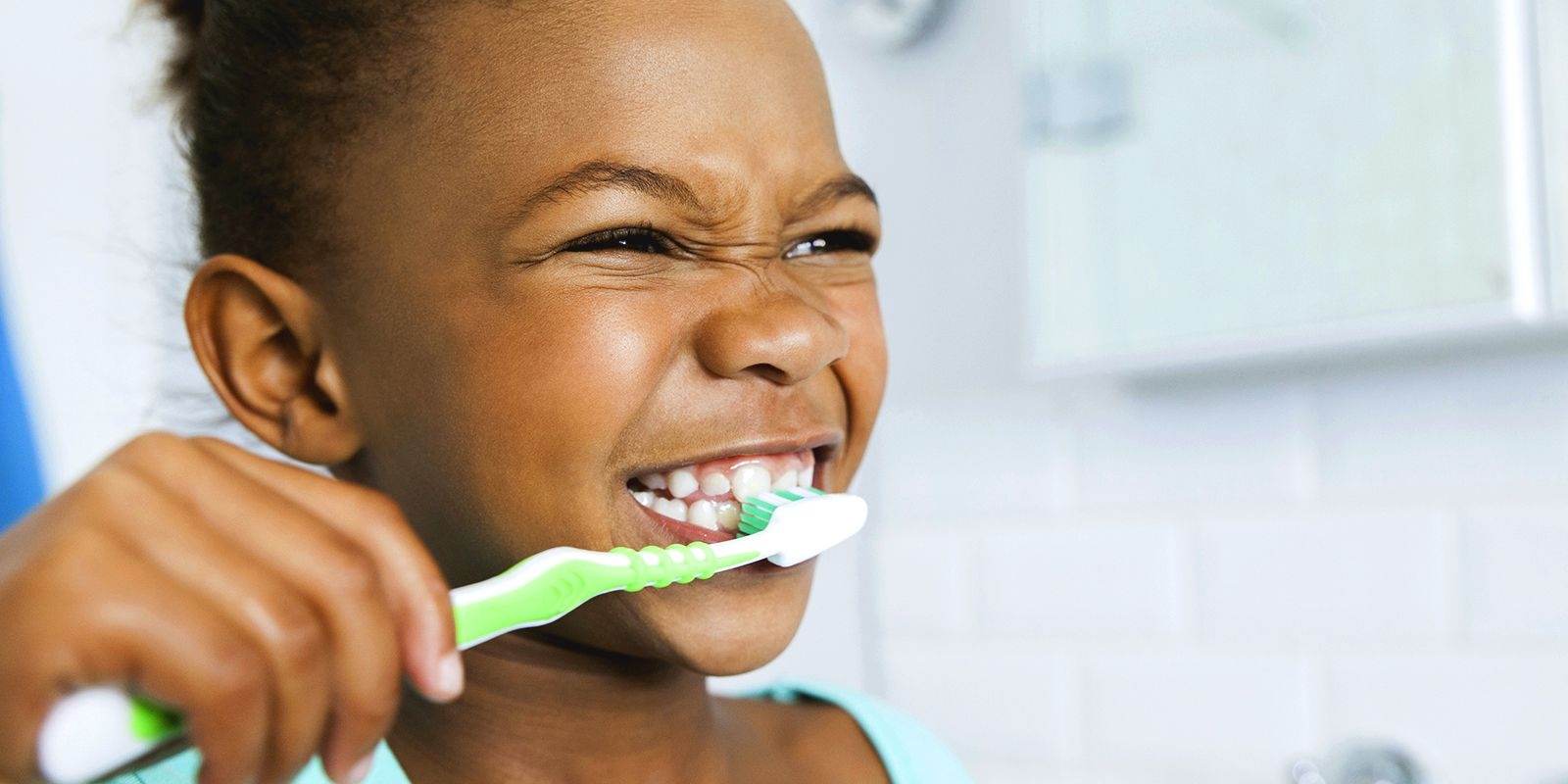
This age group is where habits either cement or fall apart. Kids have more autonomy and more ability to brush well, but also more ability to fake it and go watch TV instead.
Consider an electric toothbrush. The built-in two-minute timer removes one argument entirely. Many kids also find electric brushes more interesting, which helps with consistency. You do not need to spend a fortune, a basic kids electric brush in the twenty to forty dollar range does the job well.
Try color releasing tablets for a reality check. These are chewable tablets that stain any remaining plaque after brushing. Let your kid brush, then have them chew a tablet and look in the mirror. The stained spots show exactly what they missed. It is eye-opening for kids in a way that parental nagging never is, and most kids find it genuinely interesting rather than embarrassing at this age.
Make flossing non-negotiable. By this age, flossing should be a daily habit. Cavities between teeth are extremely common in school-age kids precisely because flossing gets skipped. Water flossers are a great option for kids who resist traditional floss — they tend to find them more fun and less annoying. The best flossing tool is the one they will actually use.
Connect it to something they care about. Kids this age respond to concrete reasons better than abstract ones. “Cavities mean shots at the dentist” is more motivating than “cavities are bad for you.” We are not above using that. Whatever works.
Teens: Pick Your Battles and Make It Easy
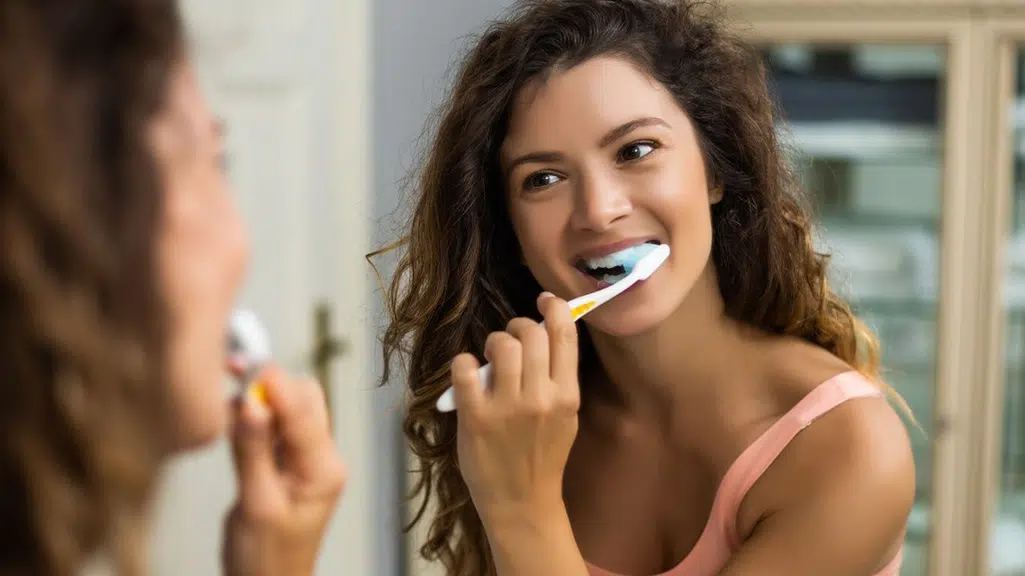
Teenagers are a different conversation entirely. You cannot force a teenager to brush their teeth any more than you can force them to unload the dishwasher without sighing heavily. What you can do is remove friction and give them reasons that actually land.
Fresh breath is a real motivator. Teenagers care about how they present to the world in a way younger kids do not. Connecting oral hygiene to confidence, appearance, and breath is not manipulative — it is honest and it works. Bad breath is largely a bacterial problem that brushing, flossing, and staying hydrated address directly.
Keep the supplies convenient. If the good toothpaste and floss are easy to reach and visible, they get used. If they are buried under the sink, they do not. This sounds obvious but makes a real difference. Some teens do better keeping a travel toothbrush and toothpaste at school for after lunch.
Talk about Invisalign differently if it comes up. Teens with orthodontic appliances need to be especially diligent about oral hygiene — food and bacteria accumulate around brackets and wires faster than on natural teeth. For teens on Invisalign, they need to brush after every meal before putting aligners back in. This is non-negotiable and worth having the conversation clearly.
Let the dentist be the bad guy sometimes. Teenagers often hear things differently from someone other than their parent. We genuinely do not mind being the ones to have the straight conversation about what skipping flossing or brushing is doing to their teeth. That is what we are here for.
The Real Secret? Make It Normal, Not a Battle.
The families we see with the healthiest kids’ mouths are not the ones who fought about brushing every night. They are the ones who made it such a consistent, expected part of the routine that it stopped being a negotiation at all. Brush after breakfast, brush before bed, no debate. It just happens.
That takes time and consistency to build, especially with little kids. But the investment is worth it, both for their teeth now and for the habits they carry into adulthood.
If you have questions about your child’s specific situation, what toothpaste to use, when to start flossing, or whether an electric brush is worth it for your seven-year-old, bring it up at your next visit. We love talking through this stuff with parents and we will give you a straight answer, not a generic one.
Bassett Creek Dental in Golden Valley sees patients of all ages and we love working with kids. We make their visits as low-pressure and fun as possible, because a kid who has a good experience at the dentist is a kid who keeps coming back. New patients are always welcome. Call us at 763-546-1301 or request an appointment online.
Frequently Asked Questions
When should kids start brushing their teeth?
As soon as the first tooth appears, which is usually around six months. At that stage you can use a soft infant toothbrush or a clean damp cloth. Once more teeth come in, a soft-bristled toddler brush with a tiny smear of fluoride toothpaste is the right move. Starting early builds the habit and protects teeth from the moment they arrive.
When should kids start flossing?
As soon as two teeth are touching. For some kids that happens as early as two or three years old. Once teeth are close enough that food can get trapped between them, flossing matters. Kids floss picks are much easier to use than traditional floss at young ages and most kids tolerate them well.
Is fluoride toothpaste safe for young kids?
Yes, and the American Dental Association recommends it starting from the first tooth. The key is using the right amount — a grain-of-rice smear for kids under three, a pea-sized amount for ages three to six. At those amounts, even if a child swallows some toothpaste, the fluoride exposure is within safe limits. The cavity-prevention benefit is significant and well-established.
Until what age should parents help kids brush?
Most kids do not have the dexterity to brush all surfaces effectively on their own until around age seven or eight. Until then, let them brush first and then do a follow-up yourself — especially on the back molars and along the gumline. A good test: if your child can tie their shoes independently, they probably have enough dexterity to brush adequately on their own.
Are electric toothbrushes better for kids?
Often yes, for a few reasons. The built-in two-minute timer is genuinely useful for kids who rush. The oscillating motion does more cleaning work with less technique required. And many kids simply find them more interesting, which means they actually use them. A basic kids electric brush is a worthwhile investment, especially for kids who resist brushing or rush through it.
My teenager refuses to floss. What do I do?
First, try a water flosser. Teenagers who resist traditional floss often find water flossers genuinely easy and even satisfying to use. They are effective and significantly less annoying than string floss for most people. Second, connect it to something they care about — fresh breath, appearance, avoiding a more uncomfortable cleaning appointment. Third, let us have the conversation at their next visit. Sometimes hearing it from someone other than a parent makes it land differently.